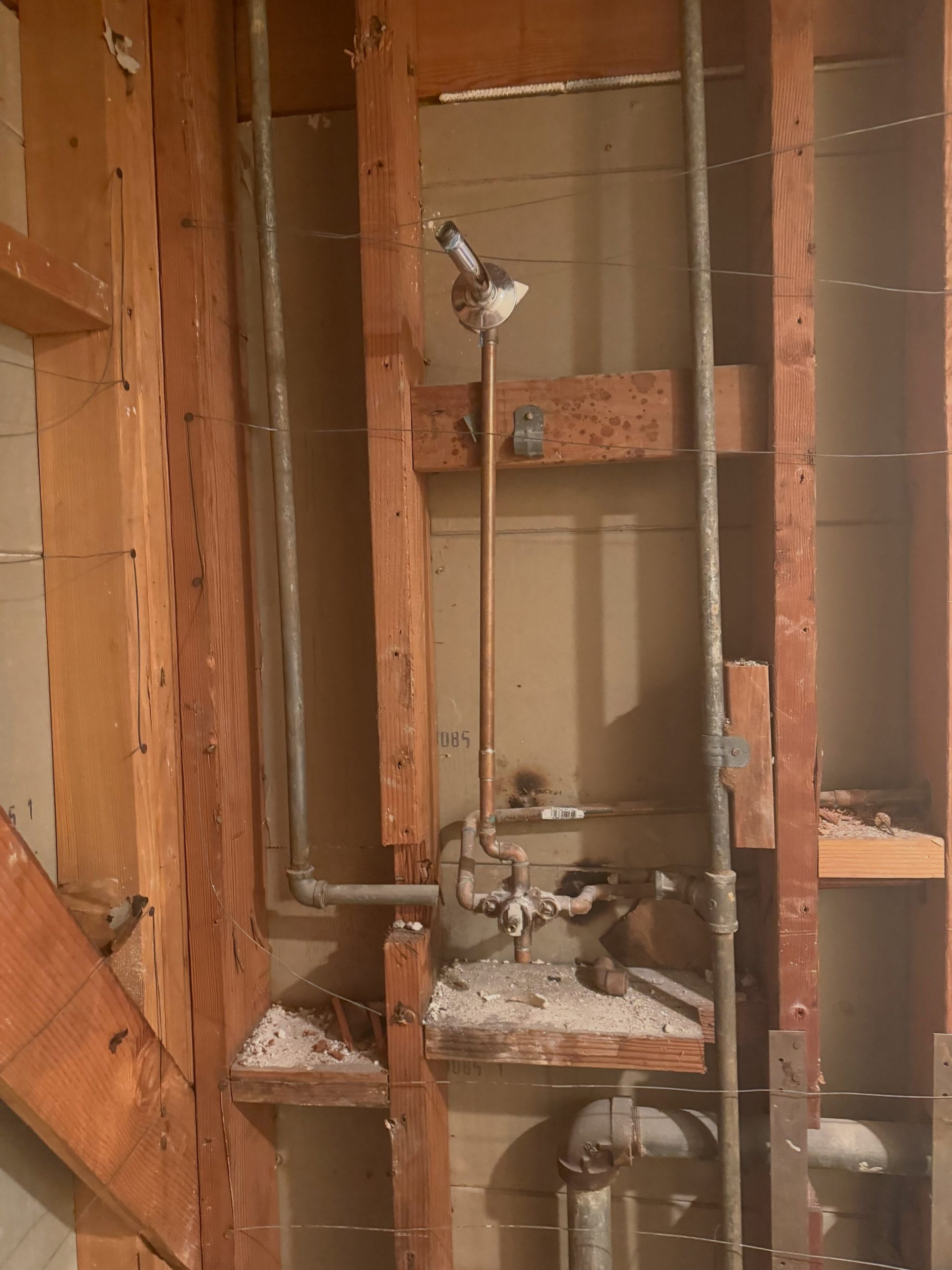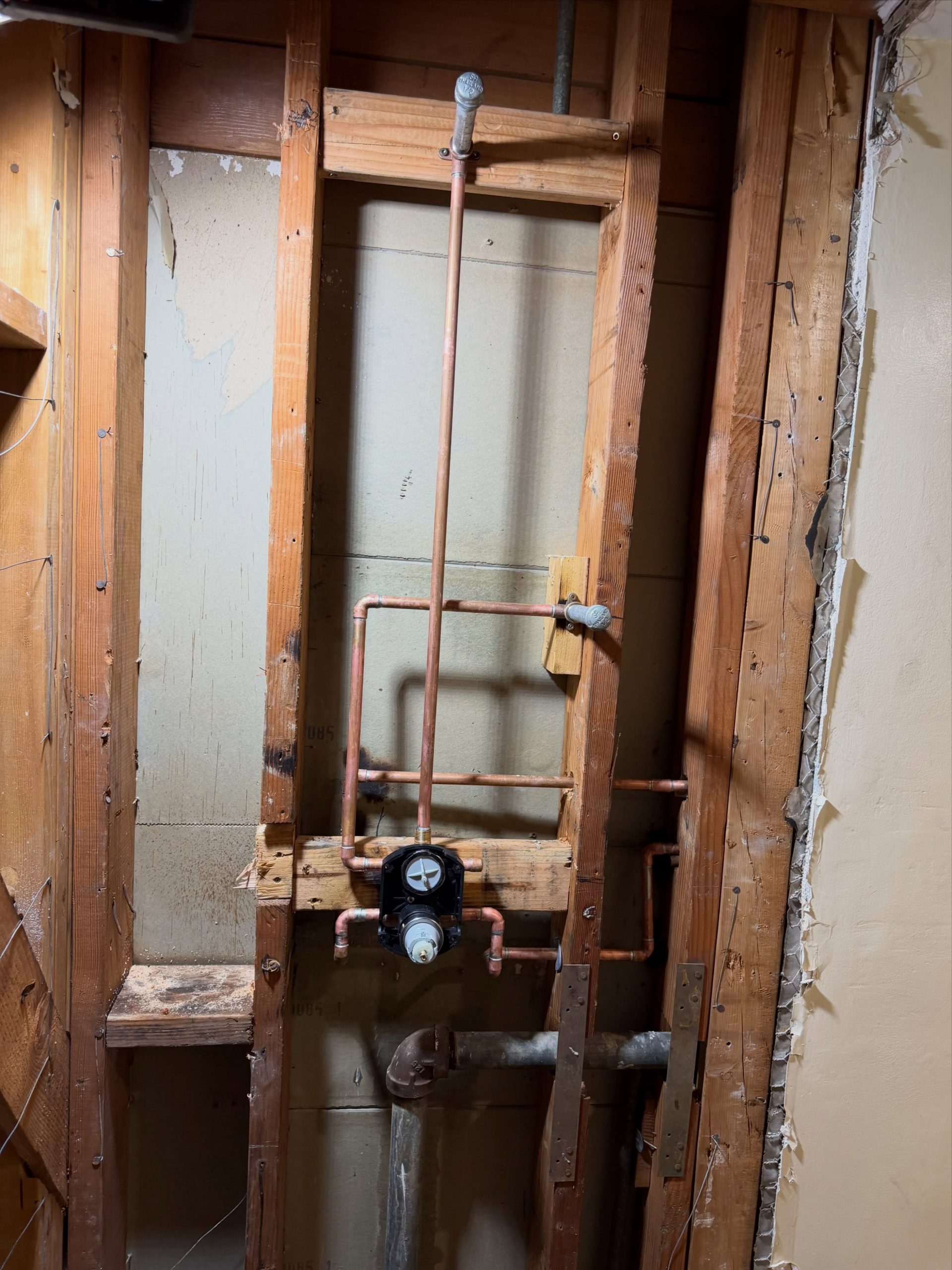
The shower valve is the part behind the wall that mixes hot and cold water and sends it to the showerhead or tub spout. You only see the handle and trim, but almost every shower problem comes back to what’s going on inside that valve.

Common Shower Problems

A shower head that keeps dripping after you turn it off usually means a worn cartridge or washer. Water that never gets fully hot, or swings from hot to cold when someone flushes, points to a worn or outdated valve. A handle that’s hard to turn or spins without doing anything is often a stripped or seized cartridge. And water coming out of the tub spout and showerhead at the same time usually means the diverter is worn out.

Most of these can be fixed by replacing the cartridge or rebuilding the valve, which is quick and doesn’t require opening the wall. We carry common cartridges and can track down parts for older brands.

Gallery Item one
Gallery Item one
Gallery Item one
Gallery Item one
Gallery Item one
Gallery Item one

When to Replace the Valve

Older homes often have two- or three-handle valves that no longer have parts available, or valves corroded to the point they can’t be rebuilt. Current code calls for pressure-balancing or thermostatic valves, which keep the water temperature steady and help prevent scalding. That’s a real safety upgrade in homes with kids or older adults.

Replacing a valve usually means opening the wall behind the shower or from the other side. We’ll look for the least invasive way in, and if you’re planning a bathroom remodel, it’s the perfect time to swap the valve.

Leaks Behind the Wall

If you’ve noticed stains on the ceiling below a bathroom, loose tile or soft drywall near the shower, the valve or its connections may be leaking inside the wall. Our leak detection service can confirm where the water is coming from before anything gets torn out.

Call (562) 614-4227 or request a quote. We also handle faucet and fixture repair throughout the house.

Skip to content